Saturday, February 4, 2023

Crisis of civilization – Rabindranath Tagore

 1)

Today I complete eighty years of my life .As I look back on the vast stretch of years that lie behind me and see in clear perspective the history of my early development, I am struck by the change that has taken place both in my own attitude and in the psychology of my countrymen -- a change that carries within it a cause of profound tragedy.

Our direct contact with the larger world of men was linked up with the contemporary history of the English people whom we came to know in those earlier days. It was mainly through their mighty literature that we formed our ideas with regard to these newcomers to our Indian shores. In those days the type of learning that was served out to us was neither plentiful nor diverse, nor was the spirit of scientific enquiry very much in evidence. Thus their scope being strictly limited, the educated of those days had recourse to English language and literature. Their days and nights were eloquent with the stately declamations of Burke, with Macaulay’s long-rolling sentences; discussions centred upon Shakespeare's drama and Byron's poetry and above all upon the large-hearted liberalism of the nineteenth-century English politics.

At the time though tentative attempts were being made to gain our national independence, at heart we had not lost faith in the generosity of the English race. This belief was so firmly rooted in the sentiments of our leaders as to lead them to hope that the victor would of his own grace pave the path of freedom for the vanquished. This belief was based upon the fact that England at the time provided a shelter to all those who had to flee from persecution in their own country. Political martyrs who had suffered for the honour of their people were accorded unreserved welcome at the hands of the English.

I was impressed by this evidence of liberal humanity in the character of the English and thus I was led to set them on the pedestal of my highest respect. This generosity in their national character had not yet been vitiated by imperialist pride. About this time, as a boy in England, I had the opportunity of listening to the speeches of John Bright, both in and outside Parliament. The large-hearted, radical liberalism of those speeches, overflowing all narrow national bounds, had made so deep an impression on my mind that something of it lingers even today, even in these day1s of graceless disillusionment.

2)

Certainly that spirit of abject dependence upon the charity of our rulers was no matter for pride. What was remarkable, however, was the wholehearted way in which we gave our recognition to human greatness even when it revealed itself in the foreigner. The best and noblest gifts of humanity cannot be the monopoly of a particular race or country; its scope may not be limited nor may it be regarded as the miser’s hoard buried underground. That is why English literature which nourished our minds in the past, does even now convey its deep resonance to the recesses of our heart.

It is difficult to find a suitable Bengali equivalent for the English word 'civilization'. That phase of civilization with which we were familiar in this country has been called by Manu 'Sadachar' (literally, proper conduct), that is, the conduct prescribed by the tradition of the race. Narrow in themselves these time-honoured social conventions originated and held good in a circumscribed geographical area, in that strip of land, Brahmavarta by name, bound on either side by the rivers Saraswati and Drisadvati. That is how a pharisaic formalism gradually got the upper hand of free thought and the ideal of 'proper conduct' which Manu found established in Brahmavarta steadily degenerated into socialized tyranny. During my boyhood days the attitude towards the cultured and educated section of Bengal, nurtured on English learning, was charged with a feeling of revolt against these rigid regulations of society.

A perusal of what Rajnarain Bose has written describing the ways of the educated gentry of those days will amply bear out what I have said just now. In place of these set codes of conduct we accepted the ideal of 'civilization' as represented by the English term.

In our own family this change of spirit was welcomed for the sake of its sheer rational and moral force and its influence was felt in every sphere of our life. Born in that atmosphere, which was moreover coloured by our intuitive bias for literature, I naturally set the English on the throne of my heart. Thus passed the first chapters of my life. Then came the parting of ways accompanied with a painful feeling of disillusion when I began increasingly to discover how easily those who accepted the highest truths of civilization disowned them with impunity whenever questions of national self-interest were involved.

There came a time when perforce I had to snatch myself away from the mere appreciation of literature. As I emerged into the stark light of bare facts, the sight of the dire poverty of the Indian masses rent my heart. Rudely shaken out of my dreams, I began to realize that perhaps in no other modern state was there such hopeless dearth of the most elementary needs of existence. And yet it was this country whose resources had fed for so long the wealth and magnificence of the British people.

While I was lost in the contemplation of the great world of civilization, I could never have remotely imagined that the great ideals of humanity would end in such ruthless travesty. But today a glaring example of it stares me in the face in the utter and contemptuous indifference of a so-called civilized race to the wellbeing of crores of Indian people. That mastery over the machine, by which the British have consolidated their sovereignty over their vast Empire, has been kept a sealed book, to which due access has been denied to this helpless country. And all the time before our very eyes Japan has been transforming herself into a mighty and prosperous nation. I have seen with my own eyes the admirable use to which Japan has put in her own country the fruits of this progress.

3)

I have also been privileged to witness, while in Moscow, the unsparing energy with which Russia has tried to fight disease and illiteracy, and has succeeded in steadily liquidating ignorance and poverty, wiping off the humiliation from the face of a vast continent. Her civilization is free from all invidious distinction between one class and another, between one sect and another. The rapid and astounding progress achieved by her made me happy and jealous at the same time.


One aspect of the Soviet administration which particularly pleased me was that it provided no scope for unseemly conflict of religious differences, nor set one community against another by unbalanced distribution of political favours. That I consider a truly civilized administration which impartially serves the common interests of the people.

While other imperialist powers sacrifice the welfare of the subject races to their own national greed, in the USSR I found a genuine attempt being made to harmonise the interests of the various nationalities that are scattered over its vast area. I saw peoples and tribes, who, only the other day, were nomadic savages being encouraged and indeed trained, to avail themselves freely of the benefits of civilization. Enormous sums are being spent on their education to expedite the process.

When I see elsewhere some two hundred nationalities -- which only a few years ago were at vastly different stages of development -- marching ahead in peaceful progress and amity, and when I look about my own country and see a very highly evolved and intellectual people drifting into the disorder of barbarism, I cannot help contrasting the two systems of governments, one based on co-operation, the other on exploitation, which have made such contrary conditions possible.

I have also seen Iran, newly awakened to a sense of national self sufficiency, attempting to fulfil her own destiny freed from the deadly grinding-stones of two European powers. During my recent visit to that country I discovered to my delight that Zoroastrians who once suffered from the fanatical hatred of the major community and whose rights had been curtailed by the ruling power were now free from this age-long repression, and that civilized life had established itself in the happy land. It is significant that Iran's good fortune dates from the day when she finally disentangled herself from the meshes of European diplomacy. With all my heart I wish Iran well.


4)

Turning to the neighbouring kingdom of Afghanistan I find that though there is much room for improvement in the field of education and social development, yet she is fortunate in that she can look forward to unending progress; for none of the European powers, boastful of their civilization, has yet succeeded in overwhelming and crushing her possibilities.


Thus while these other countries were marching ahead, India, smothered under the dead weight of British administration, lay static in her utter helplessness. Another great and ancient civilization for whose recent tragic history the British cannot disclaim responsibility, is China. To serve their own national profit the British first doped her people with opium and then appropriated a portion of her territory. As the world was about to forget the memory of this outrage, we were painfully surprised by another event. While Japan was quietly devouring North China, her act of wanton aggression was ignored as a minor incident by the veterans of British diplomacy.

We have also witnessed from this distance how actively the British statesmen acquiesced in the destruction of the Spanish Republic. On the other hand, we also noted with admiration how a band of valiant Englishmen laid down their lives for Spain. Even though the English had not aroused themselves sufficiently to their sense of responsibility towards China in the Far East, in their own immediate neighbourhood they did not hesitate to sacrifice themselves to the cause of freedom.

Such acts of heroism reminded me over again of the true English spirit to which in those early days I had given my full faith, and made me wonder how imperialist greed could bring about so ugly a transformation in the character of so great a race. Such is the tragic tale of the gradual loss of my faith in the claims of the European nations to civilization.

In India the misfortune of being governed by a foreign race is daily brought home to us not only in the callous neglect of such minimum necessities of life as adequate provision for food, clothing, education and medical facilities for the people, but in an even unhappier form in the way people have divided themselves. The pity of it is that the blame is laid at the door of our own society. So frightful a culmination of the history of our people would never have been possible, but for the encouragement it has received from secret influences emanating from high places.

One cannot believe that Indians are in any way inferior to the Japanese in intellectual capacity. The most effective difference between these two eastern peoples is that whereas India lies at the mercy of the British, Japan has been spared the shadow of alien domination. We know what we have been deprived of. That which was truly best in their own civilizations, the upholding of the dignity of human relationships, has no place in the British administration of this country.

If in its place they have established, with baton in hand, a reign of 'law and order', in other words a policeman's rule, such mockery of civilization can claim no respect from us. It is the mission of civilization to bring unity among people and establish peace and harmony. But in unfortunate India the social fabric is being rent into shreds by unseemly outbursts of hooliganism daily growing in intensity, right under the very aegis of 'law and order'.

In India, so long as no personal injury is inflicted upon any member of the ruling race, this barbarism seems to be assured of perpetuity, making us ashamed to live under such an administration.


And yet my good fortune has often brought me into close contact with really large-hearted Englishmen. Without the slightest hesitation I may say that the nobility of their character was without parallel -- in no country or community have I come across such greatness of soul. Such examples would not allow me to wholly lose faith in the race which produced them.

I had the rare blessing of having Andrews -– a real Englishman, a real Christian and a true man -– for a very close friend. Today in the perspective of death his unselfish and courageous magnanimity shines all the brighter. The whole of India remains indebted to him for innumerable acts of love and devotion. But personally speaking, I am especially beholden to him because he helped me to retain in my old age that feeling of respect for the English race with which in the past I was inspired by their literature and which I was about to lose completely. I count such Englishmen as Andrews not only as my personal and intimate friends but as friends of the whole human race. To have known them has been to me a treasured privilege.

It is my belief that such Englishmen will save British honour from shipwreck. At any rate if I had not known them, my despair at the prospect of Western civilization would be unrelieved. In the meanwhile the demon of barbarity has given up all pretence and has emerged with unconcealed fangs, ready to tear up humanity in an orgy of devastation. From one end of the world to the other the poisonous fumes of hatred darken the atmosphere.

The spirit of violence which perhaps lay dormant in the psychology of the West, has at last roused itself and desecrates the spirit of Man. The wheels of Fate will some day compel the English to give up their Indian empire. But what kind of India will they leave behind, what stark misery? 'When the stream of their centuries' administration runs dry at last, what a waste of mud and filth they will leave behind them! I had at one time believed that the springs of civilization would issue out of the heart of Europe. But today when I am about to quit the world that faith has gone bankrupt altogether.

As I look around I see the crumbling ruins of a proud civilization strewn like a vast heap of futility. And yet I shall not commit the grievous sin of losing faith in Man. I would rather look forward to the opening of a new chapter in his history after the cataclysm is over and the atmosphere rendered clean with the spirit of service and sacrifice. Perhaps that dawn will come from this horizon, from the East where the sun rises. A day will come when unvanquished Man will retrace his path of conquest, despite all barriers, to win back his lost human heritage.

Today we witness the perils which attend on the insolence of might; one day shall be borne out the full truth of what the sages have proclaimed: 'By unrighteousness man prospers, gains what appears desirable, conquers enemies, but perishes at the root.'


Address at the World Parliament of Religions – Swami Vivekananda

 Sisters and Brothers of America,

It fills my heart with joy unspeakable to rise in response to the warm and cordial welcome which you have given us. I thank you in the name of the most ancient order of monks in the world, I thank you in the name of the mother of religions, and I thank you in the name of millions and millions of Hindu people of all classes and sects.

My thanks, also, to some of the speakers on this platform who, referring to the delegates from the Orient, have told you that these men from far-off nations may well claim the honor of bearing to different lands the idea of toleration. I am proud to belong to a religion which has taught the world both tolerance and universal acceptance. We believe not only in universal toleration, but we accept all religions as true. I am proud to belong to a nation which has sheltered the persecuted and the refugees of all religions and all nations of the earth. I am proud to tell you that we have gathered in our bosom the purest remnant of the Israelites, who came to Southern India and took refuge with us in the very year in which their holy temple was shat­tered to pieces by Roman tyranny. I am proud to belong to the religion which has sheltered and is still fostering the remnant of the grand Zoroastrian nation. I will quote to you, brethren, a few lines from a hymn which I remember to have repeated from my earliest boyhood, which is every day repeated by millions of human beings: “As the different streams having their sources in different paths which men take through different tendencies, various though they appear, crooked or straight, all lead to Thee.”

The present convention, which is one of the most august assemblies ever held, is in itself a vindication, a declaration to the world of the wonderful doctrine preached in the Gita: “Whosoever comes to Me, through whatsoever form, I reach him; all men are struggling through paths which in the end lead to me.” Sectarianism, bigotry, and its horrible descen­dant, fanaticism, have long possessed this beautiful earth. They have filled the earth with vio­lence, drenched it often and often with human blood, destroyed civilization and sent whole nations to despair. Had it not been for these horrible demons, human society would be far more advanced than it is now. But their time is come; and I fervently hope that the bell that tolled this morning in honor of this convention may be the death-knell of all fanaticism, of all persecutions with the sword or with the pen, and of all uncharitable feelings between persons wending their way to the same goal.


Excerpt-

Do I wish that the Christian would become Hindu? God forbid. Do I wish that the Hindu or Buddhist would become Christian? God forbid. The seed is put in the ground, and earth and air and water are placed around it. Does the seed become the earth, or the air, or the water? No. It becomes a plant, it develops after the law of its own growth, assimilates the air, the earth, and the water, converts them into plant substance, and grows into a plant. Similar is the case with religion. The Christian is not to become a Hindu or a Buddhist, nor a Hindu or a Buddhist to become a Christian. But each must assimilate the spirit of the others and yet preserve his individuality and grow according to his own law of growth.


Tryst with destiny

 Excerpt-

Long years ago we made a tryst with destiny, and now the time comes when we shall redeem our pledge, not wholly or in full measure, but very substantially. At the stroke of the midnight hour, when the world sleeps, India will awake to life and freedom. A moment comes, which comes but rarely in history, when we step out from the old to the new, when an age ends, and when the soul of a nation, long suppressed, finds utterance. It is fitting that at this solemn moment we take the pledge of dedication to the service of India and her people and to the still larger cause of humanity.


The appointed day has come - the day appointed by destiny - and India stands forth again after long slumber and struggle, awake, vital, free, and independent. The past clings on to us still in some measure, and we have to do much before we redeem the pledges we have so often taken. Yet the turning point is past, and history begins anew for us, the history which we shall live and act and others will write about. 

Feeedom is my birthright – Bal Gangadhar Tilak

 Excerpt-

I am young in spirit though old in body. I do not wish to lose this privilege of youth. To deny the growing capacity to my thinking power is to admit that I have no right to speak on this resolution. Whatever I am going to speak today is eternally young. The body might grow old, decrepit and it might perish, but the soul is immortal. Similarly, if there might be an apparent lull in our Home Rule activities, the freedom of the spirit behind it is eternal and indestructible, and it will secure liberty for us.

The Soul means Parameshwar and the mind will not get peace till it gets identified with Him. If one body is worn out the soul will take another: so assures the Gita. This philosophy is quite old. Freedom is my birthright. So long as it is awake within me, I am not old. No weapon can cut this spirit, no fire can burn it, no water can wet it, no wind can dry it. I say further that no CID can burn it. I declare the same principle to the Superintendent of Police who is sitting before me, to the Collector who had been invited to attend this meeting and to the Government shorthand writer who is busy taking down notes of our speeches.

This principle will not disappear even if it seems to be killed. We ask for Home Rule and we must get it. The Science which ends in Home Rule is the Science of Politics and not the one which ends in slavery. The Science of Politics is the "Vedas" of the country. You have a soul and I only want to wake it up. I want to tear off the blind that has been let down by ignorant, designing and selfish people. The Science of Politics consists of two parts. The first is Divine and the second is Demonic. The slavery of a Nation comes into the latter part. There cannot be a moral justification for the Demonic part of the Science of Politics. A Nation which might justify this is guilty of sin in the sight of God. Some people have the courage to declare what is harmful to them and some have not that courage. The political and religious teaching consists in giving the knowledge of this principle. Religious and political teachings are not separate, though they appear to be so on account of foreign rule. All philosophies are included in the Science of Politics.

Who does not know the meaning of Home Rule? Who does not want it? Would you like it, if I enter your house and take possession of your cooking department? I must have the right to manage the affairs in my own house. It is only lunatics and children who do not know how to manage their own affairs.

The cardinal creed of the conferences is that a member must be above 21 years of age; do you not, therefore, think that you want your own rights? Not being lunatics or children you uuderstand your own business, your own rights and, therefore, you know Home Rule. We are told we are not fit for Home Rule. A century has passed away and the British Rule has not made us fit for Home Rule; now we will make our own efforts and fit ourselves for it.

To offer irrelevant excuses, to hold out any temptation and to make other offers will be putting a stigma on the English policy. England is trying to protect the small state of Belgium with the help of India; how can it then say that we should not have Home Rule? Those who find fault with us are avaricious people. But there are people who find fault even with the All-Merciful God. We must work hard to save the soul of our Nation without caring for anything. The good of our country consists in guarding this - our birthright. The Congress has passed this Home Rule resolution. The Provincial Conference is only a child of the Congress, which submits to mandates of its father. We will follow Shri Ramachandra in obeying the order of our father the Congress. We are determined to make efforts to get this resolution enforced even if the effort leads us to the desert, compels us to live incognito, makes us suffer any hardship and even if it finally brings us to death. Shri Ramachandra did it. Do not pass this resolution by merely clapping your hands but by taking a solemn vow that you will work for it. We will work for it by every possible constitutional and law-abiding method to get Home Rule.

Through the grace of God, England has changed its mind towards us. We feel our efforts will not be without success. England proudly thought that a tiny nation might be able to protect the Empire by itself. This pride has gone down. England has now begun to feel that it must make changes in the constitution of the Empire. Lloyd George has openly confessed that England cannot go on without the help of India. All notions about a Nation of a thousand years old have to be changed. The English people have discovered that the wisdom of all their parties is not sufficient. The Indian soldiers have saved the lives of the British soldiers on the French battlefield and have showed their bravery. Those who once considered us as slaves have begun now to call us brothers. God has brought about all these changes. We must push our demands while the notion of this brotherhood is existing in the minds of the English. We must inform them that we, thirty crores of the Indian people, are ready to lay down our lives for the Empire; and that while we are with them none shall dare cast an evil glance at the Empire.

Quit India speech – Mahatma Gandhi

 Excerpt from the speech-

Here is a mantra, a short one, that I give you. You may imprint it on your hearts and let every breath of yours give expression to it. The mantra is : ‘Do or Die’. We shall either free India or die in the attempt; we shall not live to see the perpetuation of our slavery. Every true Congressman or woman will join the struggle with an inflexible determination not to remain alive to see the country in bondage and slavery. Let that be your pledge.

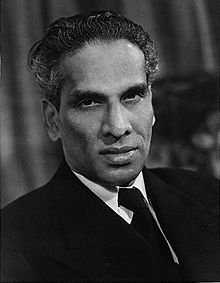
Longest Speech in the United Nations by Indian delegate V.K. Krishna Menon.

 Menon, an Indian nationalist, diplomat and statesman delivered an unprecedented eight-hour speech defending India’s stand on Kashmir. To date, the speech delivered on 23 January 1957 is the longest ever delivered in the United Nations Security Council.


Excerpt-


1:

Why is that we have never heard voices in connection with the freedom of people under the suppression and tyranny of Pakistani authorities on the other side of the cease-fire line? Why is it that we have not heard here that in ten years these people have not seen a ballot paper? With what voice can either the Security Council or anyone coming before it demand a plebiscite for a people on our side who exercise franchise, who have freedom of speech, who function under a hundred local bodies?


2: 

The Security Council regards this as a dispute. It is not a dispute for territory. There is only one problem before you… that problem is the problem of (Pakistan's) aggression.

The Government of India here is not in the dock. We came here as complainants. A distinguished colleague of ours appears to have mentioned this today: why should we be so much on the defence? If it sounds to people that we are on the defence, it may be because we indulged in some understatements both in the past and in the present. We are here not in order to ask for condemnation of anybody, but we are here in order to  state what are our rights under the Charter. Have we the right for the security of our territory? Have we the right to be free from threat? Have we the right to feel assured that the machinery of the Security Council and its resolutions are not going to be used as a smokescreen for the preparation of aggression against us? Have we the right so far as the Council is concerned and I say that it cannot impose it- to live side by side with our neighbour, free from the threats of a holy war? Have we the right to enable our peoples, the great majority of whom are below subsistence levels, to devote their energies, their attention, our resources,our friendships, for their economic and political development?

Atal Bihari Vajpayee Speech:About Indo-US relationship at the Joint Meeting of Congress, US House of Chamber

 It is with a deep sense of honour that I speak to you today. I would like to thank you, Mr Speaker, and the members of the Congress for giving me this opportunity.


In November 1999 a remarkable event took place in the House of Representatives. By a vote of 396 to 4, the House adopted a resolution congratulating India and my government on the successful elections completed in October 1999. This display of broad-based bipartisan support for strengthening relations with India is heartening.

It is a source of encouragement to both President Clinton and to me, as we work together to infuse a new quality in our ties. I thank you for the near-unique approach that you have adopted towards my country.

Those of you who saw the warm response to President Clinton's speech to our Parliament in March this year will recognise that similar cross-party support exists in India as well for deeper engagement with the USA.

I am also deeply touched by the resolution adopted in the House two days ago welcoming my visit and the prospect of closer Indo-US understanding.

Mr Speaker,

American people have shown that democracy and individual liberty provide the conditions in which knowledge progresses, science discovers, innovation occurs, enterprise thrives and, ultimately, people advance.

To more than a million and half from my country, America is now home. In turn, their industry, enterprise and skills are contributing to the advancement of American society.

I see in the outstanding success of the Indian community in America, a metaphor of the vast potential that exists in Indo-US relations, and what we can achieve together.

Just as American experience has been a lesson in what people can achieve in a democratic framework, India has been the laboratory of a democratic process rising to meet the strongest challenges that can be flung at it.

In the half century of our independent existence, we have woven an exquisite tapestry. Out of diversity we have brought unity. The several languages of India speak with one voice under the roof of our Parliament.

In your remarkable experiment as a nation state, you have proven the same truth. Out of the huddled masses that you welcomed to your shores you have created a great nation.

For me the most gratifying of the many achievements of Indian democracy has been the change it has brought to the lives of the weak and the vulnerable.

To give just one figure, in recent years it has enabled more than a million women in small towns and distant villages to enter local elected councils and to decide on issues that touch upon their lives.

Two years ago, while much of Asia was convulsed by economic crisis, India held its course.

In the last ten years, we have grown at 6.5 per cent per year: that puts India among the ten fastest growing economies of the world.

Economic activity gets more and more diversified by the year: President Clinton and many among the friends gathered here have had occasion to glimpse our advances in information technology.

We are determined to sustain the momentum of our economy: our aim is to double our per capita income in ten years -- and that means we must grow at 9 per cent a year.

To achieve this order of growth we have ushered in comprehensive reforms. We are committed to releasing the creative genius of our people, the entrepreneurial skills of the men and women of the country, of its scientists and craftsmen. At the same time, we in India, remain committed to the primacy of the State in fulfilling its social obligations to the deprived, the weak and the poor.

Important sectors of the country's infrastructure -- power, insurance, banking, telecom -- are being opened to private initiative, domestic and foreign.

Trade barriers are being lowered.

Mr Speaker, ladies and gentlemen,

There are forces outside our country that believe that they can use terror to unravel the territorial integrity of India. They wish to show that a multi-religious society cannot exit.

They pursue a task in which they are doomed to fail.

No country has faced as ferocious an attack of terrorist violence as India has over the past two decades: 21,000 were killed by foreign sponsored terrorists in Punjab alone, 16,000 have been killed in Jammu and Kashmir.

As many of you here in the Congress have in recent hearings recognised a stark fact: no region is a greater source of terrorism than our neighbourhood.

Indeed, in our neighbourhood -- in this, the 21st century -- religious war has not just been fashioned into, it has been proclaimed to be, an instrument of State policy.

Distance offers no insulation. It should not cause complacence.

You know, and I know: such evil cannot succeed.

But even in foiling it could inflict untold suffering.

That is why the United States and India have begun to deepen their cooperation for combating terrorism. We must redouble these efforts.

Mr Speaker, ladies and gentlemen,

There was a time when we were on the other side of each other's globes. Today, on the digital map, India and the United States are neighbours and partners.

India and the United States have taken the lead in shaping the information age. Over the last decade, this new technology has sustained American prosperity in a way that has challenged conventional wisdom on economic growth.

We are two nations blessed with extraordinary resources and talent. Measured in terms of the industries of tomorrow, we are together defining the partnerships of the future.

But our two countries have the potential to do more to shape the character of the global economy in this century.

We should turn the example of our own cooperation into a partnership that uses the possibilities of the new technologies for defining new ways of fighting poverty, illiteracy, hunger, disease and pollution.

Mr Speaker, ladies and gentlemen,

We believe that India and America can -- and should -- march hand in hand towards a world in which economic conditions improve for all.

A situation that provides comfortable living standards to one-third of the world's population, but condemns the remaining two-thirds to poverty and want, is unsustainable.

The foremost responsibility that the 21st century has cast on all of us is to change this unacceptable legacy of the past.

It should be our common endeavour to overcome this legacy. I, therefore, propose a comprehensive global dialogue on development.

We would be happy to offer New Delhi as the venue for this dialogue.

In this Congress, you have often expressed concern about the future contours of Asia. Will it be an Asia that will be at peace with itself? Or will it be a continent, where countries seek to redraw boundaries and settle claims -- historical of imaginary -- through force?

We seek an Asia where power does not threaten stability and security. We do not want the domination of some to crowd out the space for others. We must create an Asia where cooperative rather than aggressive assertion of national self-interests defines behaviour among nations.

If we want an Asia fashioned on such ideals -- a democratic, prosperous, tolerant, pluralistic, stable Asia -- if we want an Asia where our vital interests are secure, then it is necessary for us to re-examine old assumptions.

It is imperative for India and the United States to work together more closely in pursuit of those goals. In the years ahead, a strong, democratic and economically prosperous India, standing at the crossroads of all the major cultural and economic zones of Asia, will be an indispensable factor of stability in the region.

Our cooperation for peace and stability requires us to also define the principles of our own engagement. We must be prepared to accommodate our respective concerns.

We must have the mutual confidence to acknowledge our respective roles and complementary responsibilities in areas of vital importance to each of us.

Security issues have cost a shadow on our relationship. I believe this is unnecessary. We have much in common and no clash of interests.

We both share a commitment to ultimately eliminating nuclear weapons. We have both declared voluntary moratoriums on testing.

India understands your concerns. We do not wish to unravel your non-proliferation efforts. We wish you to understand our security concerns.

We are at a historic moment in our ties. As we embark on our common endeavour to build a new relationship, we must give practical shape to our shared belief that democracies can be friends, partners and allies.

In recent years, through all the good and difficult times, we have spoken to each other more often than we have even done in the past. I thank President Clinton for this leadership and vision in steering this dialogue. I sincerely thank members of this Congress for supporting and encouraging this process.

As we talk with candor, we open the doors to new possibilities and new areas of cooperation -- in advancing democracy, in combating terrorism, in energy and environment, science and technology and in international peacekeeping. And, we are discovering that our shared values and common interests are leading us to seek a natural partnership of shared endeavours.

India and the United States have taken a decisive step away from the past. The dawn of the new century has marked a new beginning in our relations.

Let us work to fulfill the promise and the hope of today.

Let us remove the shadow of hesitation that lies between us and our joint vision.

Let us use the strength of all that we have in common to build together a future that we wish for ourselves and for the world that we live in.

Thank

Best monologues in films